
Beavercreek Township City Directory Shelf
The Greene County Room at Xenia Community Library is the primary historical shelf for a Beavercreek Township search. Its public description confirms city directories reaching to 1870 and historic newspaper microfilm reaching to 1814. That is a collection boundary, not proof of an uninterrupted annual run or of a title devoted only to the township. The physical catalog and local-history staff are the reliable way to identify a volume's publisher, date, place coverage, and whether it includes rural routes. Township households may appear under county, Xenia, Fairborn, Beavercreek, Alpha, Dayton, or telephone-directory headings, depending on the year.
| Collection or record group | Verified span or scope | Where held | Access route |
|---|---|---|---|
| Greene County Room city directories | To 1870, with title-by-title runs to be checked | Xenia Community Library, Greene County Room | Physical catalog and staff assistance |
| Historic newspapers | Microfilm to 1814 | Greene County Room | In-library research |
| Library digital collection | Birth and death sets, church history, photographs, oral histories, and other local material | Greene County Public Library | Digital collection and library resources |
| Archives indexes and maps | Selected historic vital, map, deed, and archival groups | Greene County Records Center & Archives | Catalog, Digital Repository, reading room, or reference request |
The Greene County Room's collection description shows the library setting behind this Beavercreek Township city directory work.
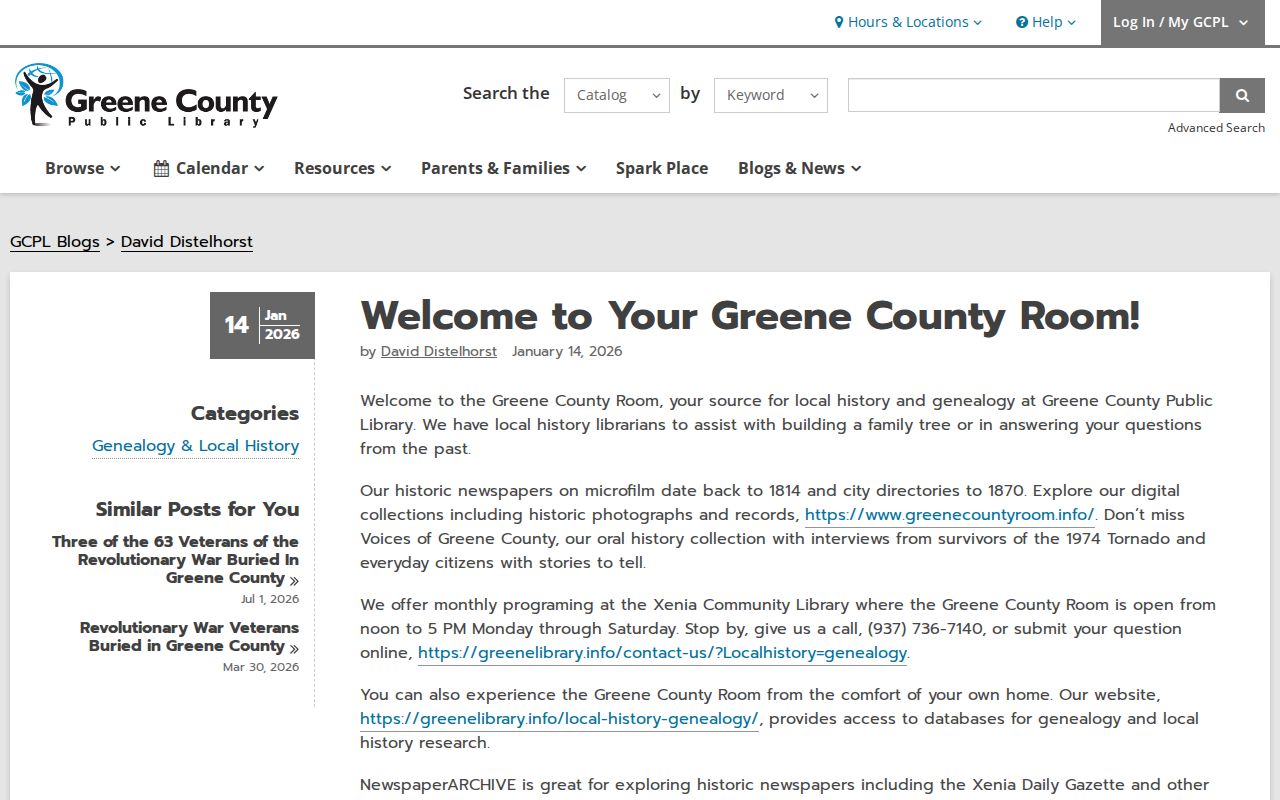
The room is an important fallback when an online name search cannot establish which nearby directory title applies to a township household.
Beavercreek Township Directory Places
Beavercreek Township is unincorporated and should not be treated as the adjacent City of Beavercreek. That matters before any city-directory volume is opened. Directory publishers often organized their books by a city, county, rural route, or telephone exchange, not by a township boundary. A historical entry using Alpha, Xenia, Fairborn, Dayton, or a rural designation may still be relevant to a township family, but the title page and stated coverage decide the question. Postal wording alone does not identify the records custodian or the household's governing jurisdiction.
Use the current parcel's legal description and township location as steady comparison points. Old street names and house numbers may have changed, while a deed, plat, atlas, or township reference can help connect the earlier place wording to the same property. The county's historical-property material specifically warns that address names and numbers can change. It also arranges historic-property inventory by township, road, and current house number, which is a practical bridge for a rural or suburban address that does not read like a dense city grid.
Note: A nearby-city directory can supply a lead, but the volume's coverage statement and a second local record should support any township connection.
Reading Beavercreek Township Directory Entries
A historical city directory is evidence of what its publisher chose to print at a particular time. The local guide identifies directories as occupant sources rather than ownership proof. No named Greene County Room entry was publicly digitized for this research, so the safest method is to inspect the actual volume before assigning a meaning to any punctuation or shortened word. Start with the title page, coverage statement, publishing date, and the abbreviation key. Then copy only the facts the entry actually prints.
| Name form | Record the surname, given name, initials, and any alternative spelling exactly as printed. |
|---|---|
| Street or route | Compare the printed location with the volume's stated geography and with maps or a legal description. |
| Household notation | Copy a spouse, widow, rural-route, or other occupancy notation only if that specific volume shows it. |
| Publisher key | Photograph or transcribe the title page and abbreviation key within library rules before interpreting a mark. |
| Missing name | Do not treat omission as proof of absence; initials, nicknames, publication dates, and incomplete rural coverage can matter. |
- Criss-cross directory
- A directory with a street-order section that can be checked by address. A Greene County Room criss-cross run was not verified, so ask staff about each volume.
- Householder index
- An index arranged around the named household contact, if the publisher included one. It is not a statement of ownership.
- Abbreviation key
- The volume's own explanation of shortened terms and symbols, usually found in front matter. It controls how that edition should be read.
Beavercreek Township Newspaper Trail
Newspaper microfilm is the companion source when a directory year is missing or a name suddenly vanishes. The Greene County Room reports historic newspaper film to 1814, and its local-history resources also point researchers toward obituary material and in-library genealogy services. Notices can place a person in a community, report a death, describe a sale, or explain a move. Many pages are not indexed, so a date, place variant, and surname spelling make the search more efficient.
The library's history and genealogy resources show the broader collection that supports city-directory research.
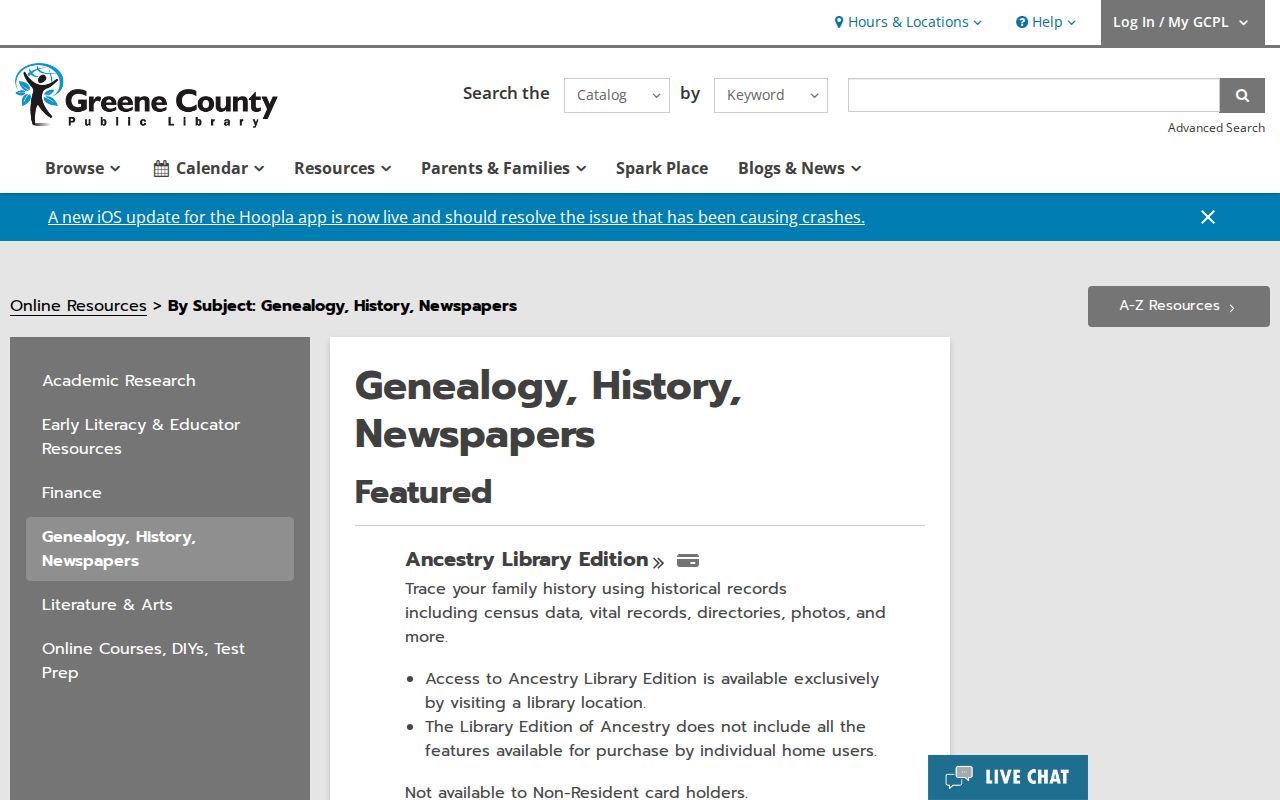
Library-only access matters here: Ancestry Library Edition is available while visiting a library location, rather than as a general remote directory search.
Beavercreek Township Archive Searches
The Greene County Records Center & Archives supplies the other major local channel. Its catalog searches public records and archival holdings, while the Digital Repository is where selected digitized images and PDFs are searched. A catalog result is not the same thing as a digitized item. The reading room, remote reference request, and copy service remain important when an item is only described online. The Archives reading room is at 535 Ledbetter Road in Xenia and is open Monday through Friday from 9 a.m. to 4 p.m.; an appointment is encouraged, not required.
The Archives Digital Repository is the official online route for selected digitized county material.
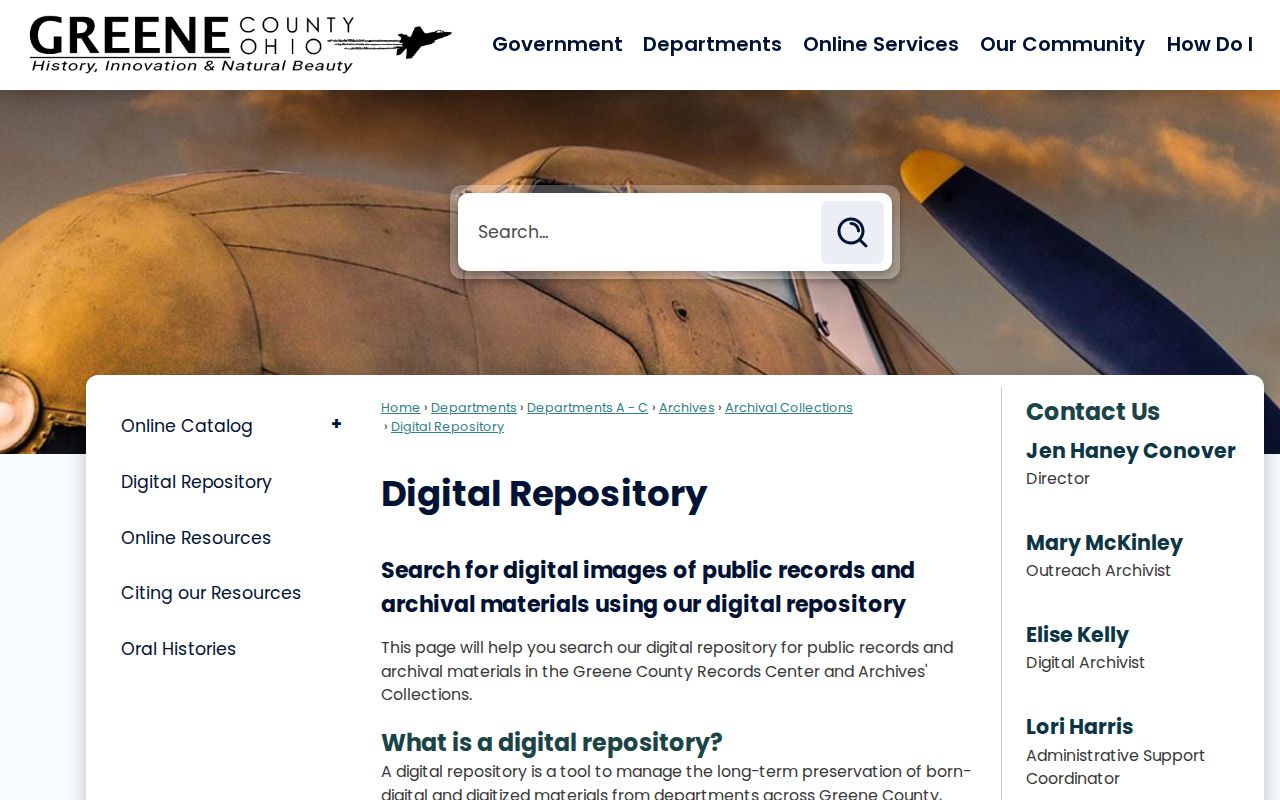
Use its keyword, browse, filter, and sort tools for digitized material, then move to the catalog or staff when the needed directory-era record is not online.
The Archives Online Catalog supports keyword and date searching, quoted phrases, exclusions with a hyphen, a one-character question-mark wildcard, and an ending asterisk wildcard.
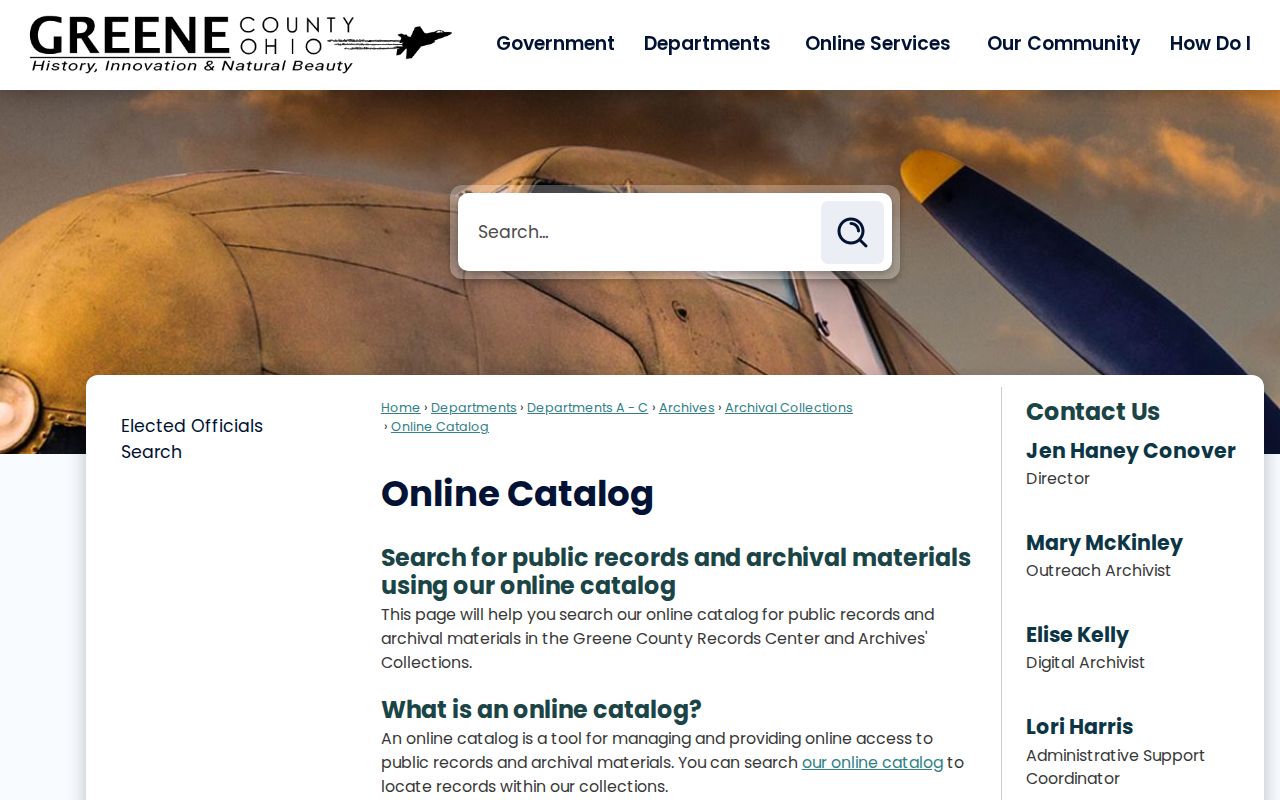
Those search options are useful for surname variants, but the catalog must still be followed by the stated reading-room or request route when the underlying item is not digitized.
Beavercreek Township Directory Timeline
The verified record timeline explains why a single online search is not enough. The county record trail includes deeds from 1803, archived deed transcriptions for 1804 through 1864, newspapers on microfilm to 1814, and the Greene County Room's city-directory collection to 1870. The available sources do not publish every directory title, publisher, or annual gap. A research note should therefore identify the actual volume used, rather than filling a missing year with a plausible-sounding run.
| 1803 | Greene County Recorder states that county deeds run from this year. |
|---|---|
| 1804-1864 | Greene County Archives holds transcribed deeds for this early period. |
| 1814 | Greene County Room reports historic newspaper microfilm reaching this year. |
| 1870 | Greene County Room reports city directories reaching this collection point. |
| January 2026 | The library reaffirmed the newspaper and directory holdings and directed researchers to the Greene County Room and digital collection. |
This current library confirmation is useful for planning a visit, but it does not turn the historical shelf into a complete online city directory.
Trace Beavercreek Township City Directories
Follow one household across sources instead of trusting a single printed line. Begin with a present-day parcel only to establish the legal description and township context. Then use the Greene County Room catalog to find volumes that match the historical place name, not merely the modern Beavercreek label. The county Recorder's online index begins in 1984, so an older ownership question often moves to its counter, the Archives, or the library's deed-index microfilm. When a directory lead needs a current-record comparison, use the separate Beavercreek Township resident lookup workflow rather than treating an old listing as present residence.
- Record the directory title, publisher, coverage statement, and publication date before copying a name.
- Search surname variants and the relevant address or rural-place wording in the physical volume.
- Compare a directory year with the federal census released for that era, remembering that a census is a household snapshot on its enumeration date.
- Use the Recorder, deed-index film, or Archives to distinguish an occupant lead from a title or legal-description record.
- Check newspaper, obituary, cemetery, probate, and vital-index material when a move, death, or heir question explains the change.
Federal census records follow a 72-year public-release practice, and 1950 was the latest released decennial census at the time of this research. A directory and census can both be accurate while reflecting different dates, spellings, or place labels.
Beavercreek Township Early People Records
Directories are only one shelf in the local historical record. The Archives inventory includes a Greene County naturalization index list for 1861 through 1906, probate and vital-record groups, historical maps, and early emancipation-related sources. The Ohio History Connection identifies Greene County manumission-register material for 1804 through 1857. These are historical documents with their own limits, not substitutes for a modern resident roster. Read the record date, creator, place, and relationship wording closely before drawing family conclusions.
The library's digital collection also includes county birth records from 1869 through 1909, death records from 1869 through 1909, church history, Children’s Home records from 1904 through 1924, photographs, oral histories, and the 1974 tornado collection. The County Archives can direct a researcher to its catalog, reading room, and remote reference channel when these local sources need context or an offline search.